Concrete & Brick Patio Pavers. Matching Coverage Area.. Service Type.. Checking Availability..
Profiles & Reviews.. Local Cost Data.. If processing is not complete in 1.
Proper planning will ensure that your brick paver installation project is a success. When taking measurements, always round up as it is better to overestimate the. Paver Patterns + The TOP 5 Patio Pavers Design Ideas by Luke Whittaker. If you’re planning on installing a raised paver patio, we’ve put together a DIY Step-by-Step Guide to help anyone build a raised paver patio and eliminate costly. Jason Cameron shares important tips on how to install a new paver walkway.

How to Install a Retaining Wall. System Components. Retaining Walls are designed to hold up a surcharge of soil such as a sloping hill or raised planter box. Tycoon City New York Patch Cracked. All Retaining Walls share some common building components in their construction.
Providing brick, stepping stones, cultured stone, natural stone bricks and pavers for residential and commercial uses. Mutual Materials plank pavers bring a unique modern design option for outdoor hardscape projects. Inspired by hardwood flooring, plank pavers allow for diverse. Installing a brick walkway is easy and can add beauty to your outdoor living. There are many different types and colors of. Find local contractors to Replace or Install Concrete or Brick Pavers (Interlocking Brick or Concrete Blocks). HomeAdvisor will connect you with prescreened and. The Paver Company Sacramento, We specialize in Paver Stone Driveways, Paver Stone Walkways, Paver Stone Patios, Concrete Block and Turf in Sacramento, CA.
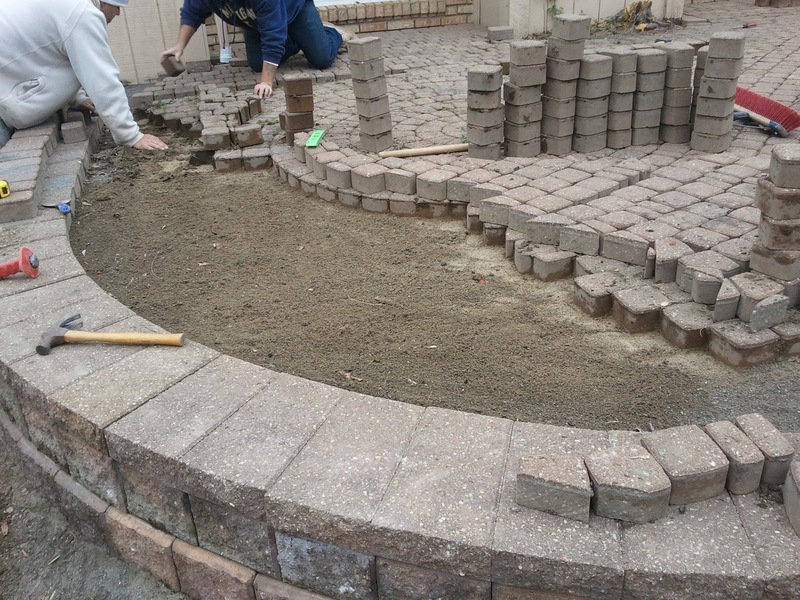
How To Install Brick Paver Stairs Installation
Below is an overview of the different types of walls and these common components. Wall Components Leveling Pad: A level base on which the wall sits. This is standard for all typesof landscape walls: retaining and free- standing.
Back- fill: Placed behind the retaining wall to promote drainage of water away from the wall. This prevents water from building up behind the wall; the leading cause of wall failure. Drainage Pipe: As water drains through the back- fill of a retaining wall, the drainage pipe then carries the water away from the wall. Connections: All retaining walls will use some sort of connection to secure the block courses. Fiberglass pins, molded pins, a lipped system, or the use of masonry adhesive. Overview: Getting Started This guide is a general overview of retaining wall construction.
If you need clarification on your specific wall type, please contact an RCP Block & Brick near you. Required Tools. Shovel, Pick (for excavating base trench)Wheel Barrow. Hand Compactor. Level. String line (for wall alignment)Rubber Mallet (for block adjustments)Things to Keep in Mind While Installing.
The height of the wall design will determine which products you will be able to use. All wall heights include any buried courses of block. Any wall over 3. 6. These are pre- engineered specifications for common wall projects taller than 3. They will help save time and money during the permitting process.
Step 1: The Leveling Pad. The leveling pad is the first piece in all wall designs. This is the structure on which the weight of the wall will rest.
It must be compacted and level to support the retaining wall. Excavate the Site: Remove all surface vegetation and debris. Do not use this material as backfill.
After selecting the location and length of the wall, excavate the base trench to the designed width and depth. For base trench dimensions for your style of block, contact an RCP Block & Brick near you for information. Install the Leveling Pad: Fill the prepared trench with a 6. We recommend 3/4. Do NOT use pea gravel. NOTE: If grade changes along base of wall, create a stepped leveling pad as required (Diagram Shown). Always start wall at lowest elevation, working to highest.
Step 2: The Base Course & Drainage Pipe. The first course of block that you lay is known as the base course. It is paramount that this course is as close to level as possible. If your base course is just a fraction out of level, it will be quite noticeable once you get to your final course. Laying out the Base Course. This first course will be placed below final grade.
Meaning you will be buryingthe first (or more) courses. Place the first course of block units end to end on the prepared leveling pad. Make sure each unit is level - side to side and front to back. Leveling the first course is critical for accurate and acceptable results. Complete this first course before adding additional courses. For Pinned Units: The long groove (receiving channel) on the unit should be placed down and the pin holes should face up.
For Lipped Units: To help with leveling of base course, remove the lips from the first course of block units. To remove lips, hold unit firmly on ground and strikelip with hammer.
TIP: For alignment of straight walls, use a string line aligned on the pin holes of applicable units, or back of the block of lipped units. Installing Drainage Pipe. It is as this point where you will need to install drainage pipe behind the first course of block.
Water will flow down through the backfill material to the base of the retaining wall. The drainage pipe will be located here to move the water away from behind the wall. Step 3: Insert Connector Pins*For Pinned Systems Only. For other styles, move to Step 4. The majority of our mid- sized and larger landscape wall block use fiberglass or molded pins to secure the block to one another.
These pins fit into pre- existing holes on the top of each unit, and fit into the receiving channel on the bottom of the above block unit. Inserting the Connection Pins.
Place the connector pins into the pin holes of the units (Note: Use middle pin hole for vertical alignment, other holes can be used for wall setback or projection of unit). In instances where the pin may not align with receiving channel of above block, the pin can be removed, and masonry adhesive can be used in its place.
If a pin lines up with a core/cavity of the block above, it will secure when the cavity is filled with gravel. See Video on Inserting Keystone Connector Pins Step 4: Backfill & Compaction Adding proper backfill to your retaining wall is extremely important as this is a key element in helping divert water away from the back of the wall. Backfilling your Retaining Wall. Using 3/4. As you backfill each course, do so in 6.
Do not use jumping or ramming type compaction. Step 5: Additional Courses This is where your landscape wall will start to take shape. As you add courses you will be able to make small adjustments and corrections. Adding Additional Courses: Pinned Units: Place the next course of block units over the fiberglass pins, fitting the pins into the long receiving channel recess of the units above (Note: Some removal of debris in the pin holes and channel may be necessary prior to placement).
Push the block units toward the face of the wall until they make full contact with the pins. If pins do not connect with channel but align in open coreof upper unit, place drainage fill in core to provide unit interlock with pin. Fornear vertical alignment, center the unit above over the center placed pins below. The lip of the above unit will rest behind the lower block, securing it in place.
Build through curves in a similar manner. Continue steps 4 and 5 until desired wall height has been reached.
Masonry Adhesive Connection: Some units require masonry adhesive for securing as they are neither a lipped or pinned system. Keep a Running Bond: When stacking additional courses, make sure the joints (spaces between block units) do not line up with those of the courses above or below. This is known as a . If stack bond occurs, remove rear interlock lip or cut units accordingly to get back to running bond. Does Your Wall Require Geogrid?*Only Applicable on some larger retaining wall designs (Usually when taller than 3.
Geogrid is used to stabilize the soil behind some larger retaining wall designs or when a the wall is holding back a slope. Geogrid may be required throughout the building process. Contact an RCP Block & Brick near you for more information. For Installation: Geogrid Installation Guidelines. Step 7: Capping the Wall. The final step to finishing your wall project is the addition of the wall cap.
There are a variety of caps that compliment each individual wall style. How to Install the Wall Cap: Continue all steps until ready to place the wall cap. Clean off the last course of block in preparation for the cap or coping to finalize the wall. With units dry and clean, use construction adhesive for a mechanical bond. Cap may be flush or overhanging as required by aesthetics and design.